

Why Your Baby Loves Their Pacifier (and How to Help Them Let Go with Comfort and Confidence)

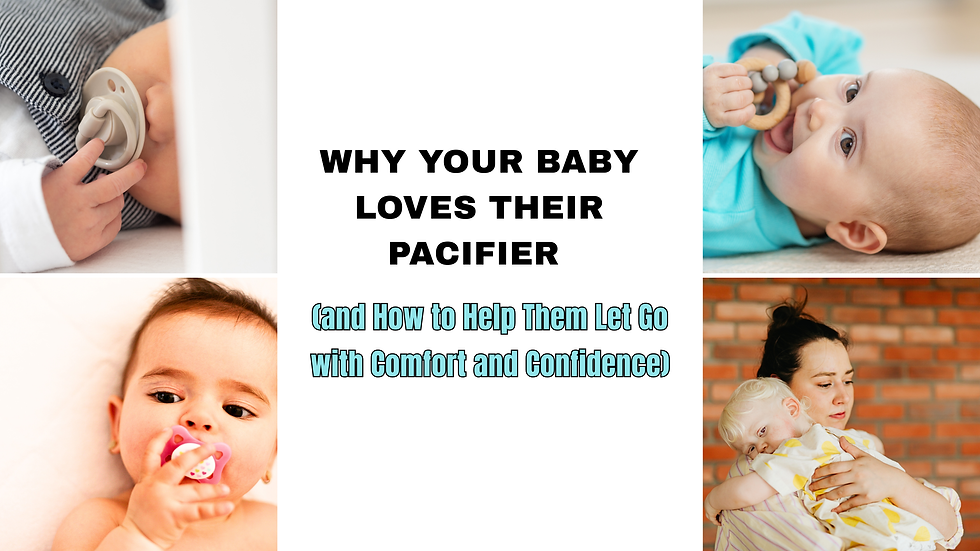
Parents often share their concern about their baby’s dependence on the pacifier and how long it’s okay to use one. If your baby’s pacifier feels like the secret to peace in your home, you’re not alone.
That tiny piece of silicone can work wonders, instantly calming your little one, helping them drift to sleep, and giving you a much-needed moment of quiet.
But behind that magic, there’s something deeper happening — something tied to your baby’s sensory and oral development.
What’s Really Going On
When your baby sucks on a pacifier, their mouth is doing important developmental work.Their lips, tongue, and jaw are moving rhythmically together, sending steady, calming signals to the brain. This movement:
Provides deep, soothing pressure in the mouth and jaw
Builds early oral motor coordination
Creates a comforting rhythm that helps regulate their nervous system
Gives them a sense of control: “I can calm myself.”
It’s not just a habit — it’s their body’s way of finding balance.
The Dental Worry (and Why You Can Relax)
Many parents start to worry: “Will this affect their teeth?”
Here’s the good news — pacifiers are safe in the early years. Dental changes tend to occur only with heavy use beyond age two or three. Using a pacifier for comfort through infancy and early toddlerhood is part of healthy development.
The key is to wean gradually, replacing that soothing oral input with new, age-appropriate activities — not taking it away cold turkey.
Think of it as shifting from one comfort tool to another, rather than losing something they rely on.
When They Still Crave That Comfort
After the pacifier is gone, you might notice your child still seeking oral input — chewing on toys, sleeves, or fingers, or struggling to settle before bed.These are all signs that their body is still asking for that same soothing mouth work.
Healthy Ways to Meet That Need
Oral play:
Smoothies or yogurt through a straw (that same rhythmic sucking!)
Soft fruit, teething biscuits, or meltable snacks
Safe silicone spoons or teethers for exploration
Chewy tools:
Chewy tubes or silicone necklaces for safe resistance
Vibrating teethers for gentle, calming feedback
Toothbrush play to add deep pressure while building healthy habits
Whole-body calming:
Gentle rocking or rhythmic bouncing
Deep hugs or firm squeezes with a soft blanket
Humming, lullabies, or white noise for predictable rhythm
These small sensory experiences give your child the same kind of comfort the pacifier once did — while supporting oral strength, sensory organization, and self-regulation.
A Loving Transition
Your baby’s pacifier isn’t just soothing — it’s developmental. It’s helped them discover how to calm their body and regulate their senses.
As they grow, your role isn’t to remove comfort — it’s to help it evolve. One sip, chew, or cuddle at a time, you’re giving them new ways to feel safe, confident, and connected.
So the next time your child reaches for their pacifier or chews on a toy, remember: Their body isn’t stuck — it’s simply asking for the same soothing input in a new way.
If you have any questions or concerns about your baby’s development, we’d love to help — reach out anytime or join one of our Sensory and Motor Development Baby Classes at our Hoboken based Clubhouse.
Best,
Jordanna



Comments